Program Committees
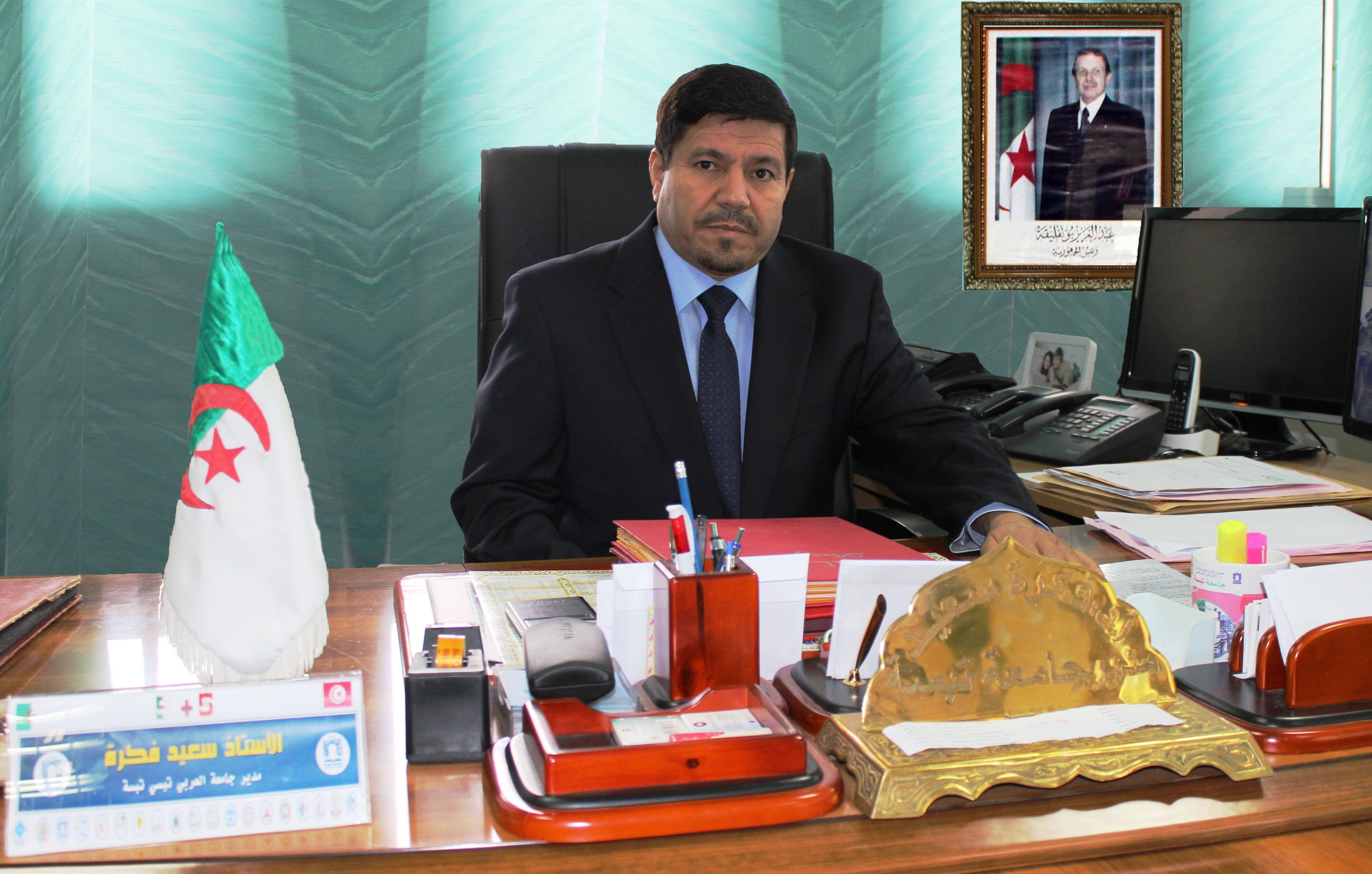 Honorary Chair
Pr Said FEKRA,
Rector of Larbi Tebessi University- <
 PAIS'15 General Chair
Dr. Derdour Makhlouf - Program chairs
- Chawki DJADDI
- Hakim BENDJENNA
- Makhlouf DERDOUR
- M. Ridda LAOUAR - Publicity Chair
- Gattal ABDELDJALIL
Sponsored by:



• Topics including
The PAIS’2015 conference aims to address the main issues of concern within the intelligent systems.
This conference covers both the technical as well as the non-technical aspects of the intelligent system.
Broad areas of interest are eSociety and Digital Divide, eBusiness/eCommerce, eLearning, New Media and E-Society, Digital Services in
ESociety, eGovernment / eGovernance, eHealth, Information Systems, and Information Management.
These broad areas are divided into more detailed areas (see below).
However innovative contributes that don’t fit into these areas will also be considered since they might be of benefit to conference attendees.
The scope of PAIS’2015 includes, but not limited to, the following areas:
- Approximation methods
- Big data
- Biometrics
- Human pose estimation
- Image and video processing
- Medical imaging
- Mobile multimedia
- Wireless sensor network
- Cloud computing
- Pattern recognition
- ...
|
Track 1. Machine Vision
- Pattern Recognition
- Image Processing and Artificial Vision Application
- Pattern Recognition: Fuzzy Clustering and Classifiers
- Fuzzy Image, Speech and Signal Processing - Vision and Multimedia Track 2. Datamining & Software Development - Software Engineering Issues; Meta-modelling - Collective & Distributed Intelligent Systems - Neural based Data Mining and Complex Information Processing - Complex Artificial Neural Network based Systems - Complex-valued Neural Networks - Neural Network Software and Applications - Neuroinformatics and Bioinformatics Track 3. Intelligent Systems - Electronic Data Interchange (EDI) - Intelligent Agents - Intelligent Systems - IS Security Issues - Mobile Applications - Multimedia Applications - Software Requirements and IS Architectures - Ubiquitous Computing - Wireless Communications |
Track 4. Technological excellence and social innovation - E-Society, E-Participation and E-Democracy - Cloud computing, smart technologies - Big Data, open data - Security, Privacy and Ethics in the digital era - Smart Cities, E-Gov, Participatory Urban Design - Interoperability, SmartGov and E-Gov Architectures - Social networking & data journalism - Participatory design & leadership methods, - Social innovation & systemic change - Participatory constitutional design theory and practice - Nation branding strategies – Local communities strengthening and place development Track 5. Artificial Intelligence - Self-organization and Emergence - Stability and Instability in Artificial Neural Networks - Modular Implementation of Artificial Neural Networks - Neural Multi-agent Intelligent Systems and Applications - Representation Techniques - Evolutionary Multi-objective Optimization - Machine Learning - Cognitive Systems |